
Differences Between Rotor Stators and High Pressure Homogenizers
When it comes to homogenization, two technologies often come to mind: rotor stator homogenizers and high pressure homogenizers. While both are effective for processing liquid samples, they differ significantly in terms of functionality, scalability, and suitability for specific applications. This article provides a detailed comparison of these two technologies, highlighting their pros and cons, key features, and the types of applications they are best suited for. Whether you're processing small lab samples or scaling up for industrial use, understanding these differences will help you make the right choice for your needs.
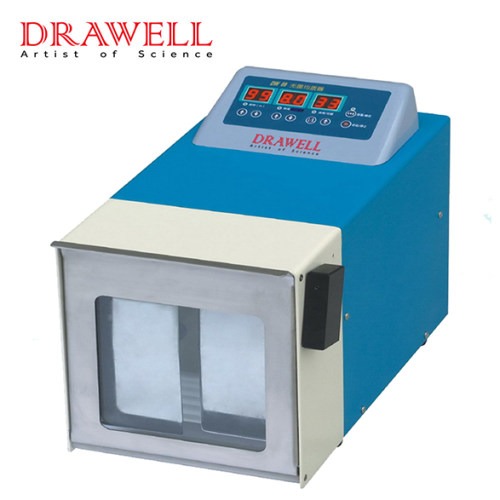
Rotor Stator Homogenizers
Rotor stator homogenizers use shear force to process samples. The rotor, a metal shaft, rotates at high speeds within the stator, a stationary metal casing. This rotation creates a suction effect that pulls the sample into the high-shear environment between the rotor and stator. This process is ideal for liquid samples and offers flexibility in terms of probe selection, allowing users to switch between different probe types for specific applications.
One of the main advantages of rotor stator homogenizers is their ability to process a broad range of sample sizes. Some models have no maximum volume, making them suitable for scaleup processes. They are also efficient for processing single samples quickly. However, they are not suitable for solid samples, and heat generation during processing may require cooling methods for heat-sensitive materials. Additionally, cleaning probes between samples can be time-consuming, especially for high-throughput applications.
High Pressure Homogenizers
High pressure homogenizers subject liquid samples to extremely high shear forces. The process typically involves forcing the sample through a narrow channel, such as a valve or membrane openings, creating high shear forces, a pressure drop, and cavitation. Some models also include a collision mechanism, where the sample stream collides with a plate, blade, or ring to aid in homogenization.
High pressure homogenizers are particularly well-suited for large liquid samples and can produce very small particle sizes. They are highly reproducible and scalable, making them ideal for industrial applications. However, they are not suitable for multi-sample processing, and cleaning between samples can be labor-intensive. Additionally, these units are often large, heavy, and expensive, making them less portable and more suitable for large-scale operations.
Key Features Compared
To better understand the differences between rotor stator and high pressure homogenizers, let's compare their key features:
| Feature | Rotor Stator Homogenizer | High Pressure Homogenizer |
|---|---|---|
| Particle Size | Min particle size: ~2–3 µm | Min particle size: ~100 nm |
| Sample Size | 0.03 mL and up | ~10 mL and up |
| Throughput | Generally low | Low |
| Scaleup | Easy to scale up | Highly suitable for scaleup |
| Heat Generated | Some heat generated | Significant heat generated |
| Ease of Use | Easy to set up and good for single samples | Time-consuming to set up but good for large single samples |
| Cleaning | Fairly simple to clean between uses | Cleaning can be labor-intensive |
| Max. Viscosity | ~ 10,000 cP | ~ 100,000 cP |
Applications
Both rotor stator and high pressure homogenizers are used in a variety of applications, but each technology excels in specific areas. Rotor stator homogenizers are ideal for emulsification, suspensions, and general particle size reduction for particles larger than 1 µm. They are also used for tissue homogenization and cell isolation. On the other hand, high pressure homogenizers are commonly used for emulsification, cell disruption, and particle size reduction for particles larger than 100 nm. They are also effective for organelle isolation and other industrial applications.
For those looking for a reliable Laboratory Equipment Supplier, it's important to consider the specific requirements of your application. Whether you need to process large volumes or achieve very small particle sizes, understanding the strengths and limitations of each technology will help you make an informed decision.
Video Demonstration
Choosing between a rotor stator homogenizer and a high pressure homogenizer depends largely on your specific needs and applications. Rotor stator homogenizers are highly suitable for small to medium-sized samples and offer flexibility in probe selection, while high pressure homogenizers excel in large-scale operations and can achieve smaller particle sizes. Both technologies generate heat, but there are methods to mitigate this issue. Ultimately, the decision should be based on factors such as sample size, viscosity, throughput, and the need for scalability. For more information on laboratory equipment, visit a trusted Laboratory Equipment Supplier.